Homemade Argon Laser
A Tentative Design

The following pictures (click on any picture or diagram for a larger view) illustrate what I hope will be a working argon laser. However, I have serious doubts that this initial design will survive completion. My concern is that I will be unable to completely remove all oil and dirt residue as a result of the drilling and machining of the individual parts involved. Unlike my CO2 laser, a pulsed argon laser will likely require that the plasma tube be free of contaminants - especially oil and dirt.
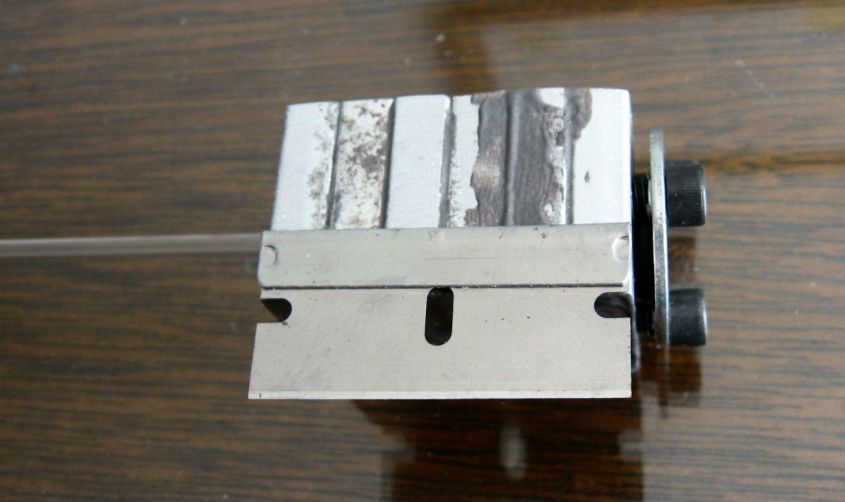
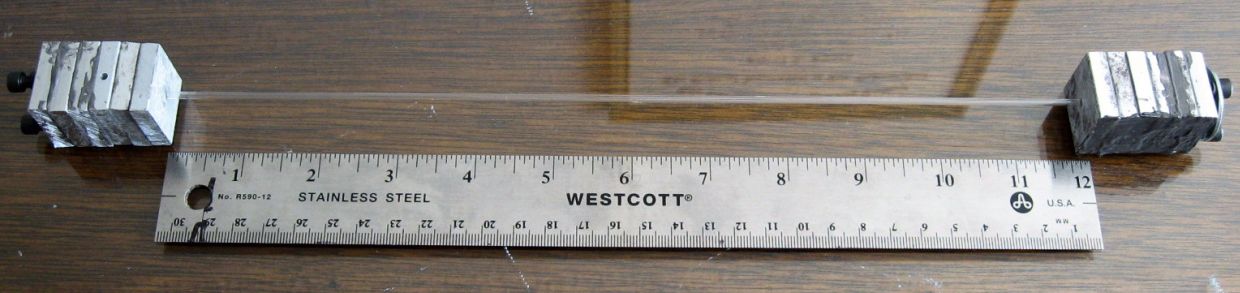
Two aluminum blocks seperated by narrow glass tubing
The glass tubing was obtained from a cold cathode lamp, removed from the inside of a computer monitor. The aluminum blocks were prepared by combining individual pieces of 1" x 1" x 1/4" aluminum squares.
More on tubing
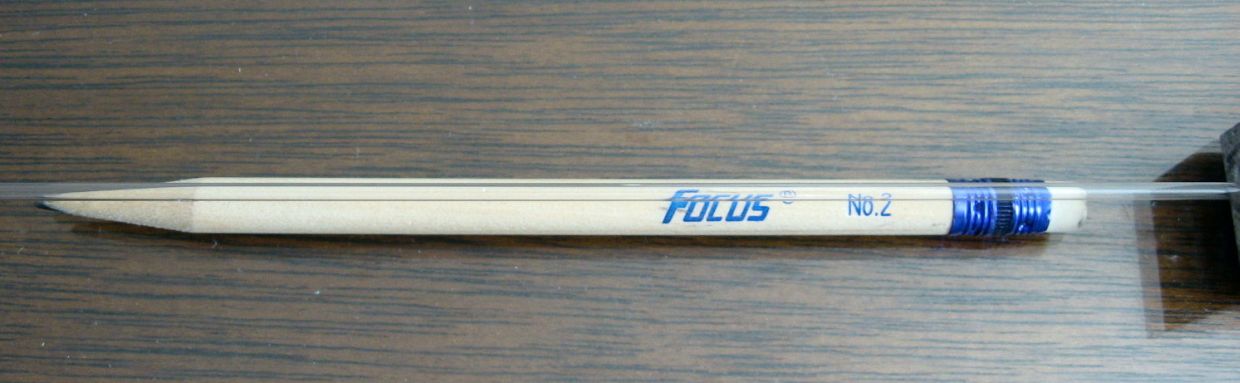
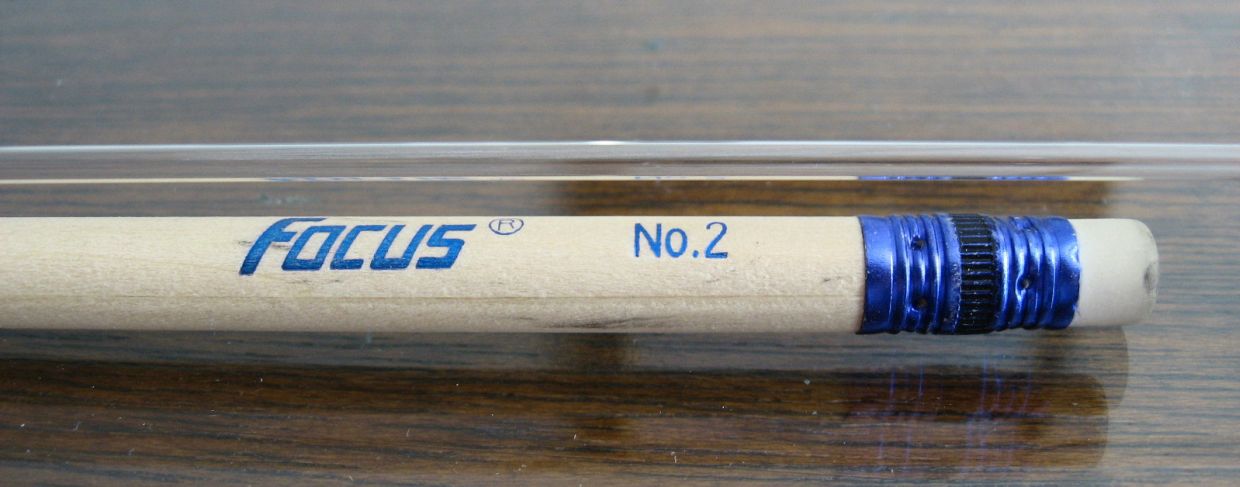
Cold cathode lamp tubing is a convenient supply for such a laser. The tubing has a narrow bore (1mm, 2mm?), which makes it easy to obtain high current density when charges are passed through it. This tubing is also paper thin. Although not an issue when pulses are adequately spaced, the thin walls of this tubing would be ideal in a design where cooling is required. The disadvangage is that it is harder to keep the tubing straight, especially in longer sections: by comparison, thicker walls would prevent this tubing from flexing or bending.
Aluminum blocks, and their purpose
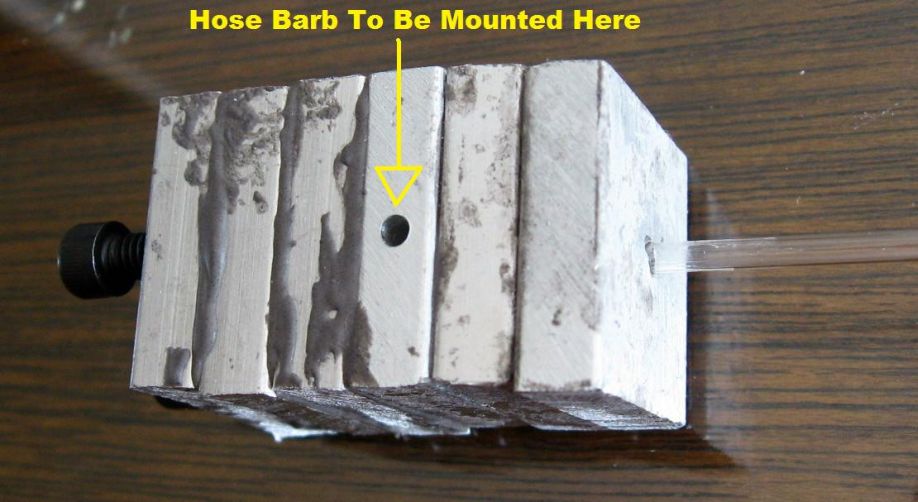
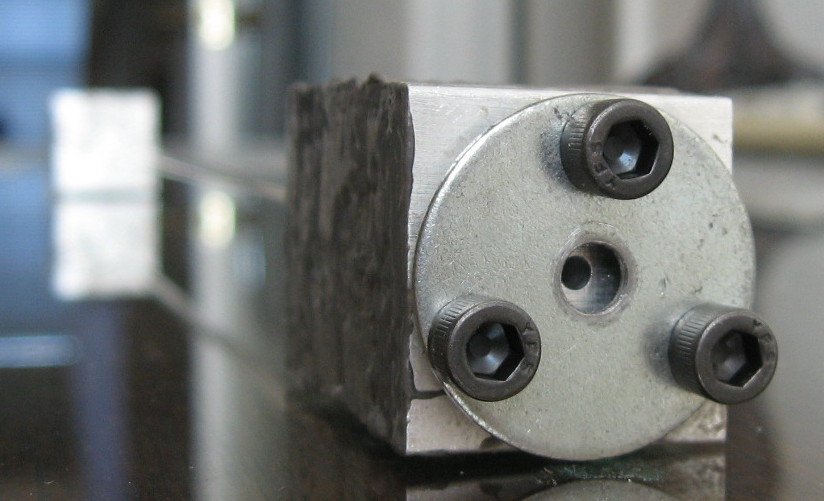
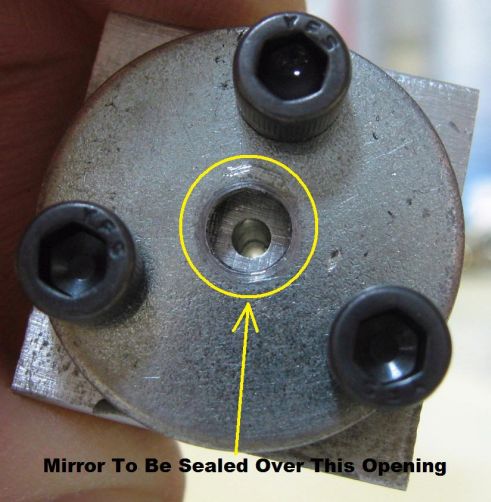
The aluminum blocks serve as both electrodes and support structure for the laser tube and related parts. A hose barb is to be mounted onto the blocks, under which holes are to be strategically drilled in order to provide a path into the laser plasma. By using these hose barbs, air can be removed from the tube and replaced with argon gas. The blocks not only serve as a support structure for the hose barbs and plasma tube, but also for the adjustable mirror mounts. As with my CO2 laser, the mirror mounts will use O-rings to enable movement needed to adjust and align the resorator, and to seal the tube so that the active gas fill can be contained and sealed from the outside atmosphere. Personally, I cannot forsee any reason why I would want to mess with Brewster windows (at least not at this stage). I'm not concerned with having a polarized output. Although optimized for transmission, real world Brewster windows still present some loss. As far as I'm concerned, it's an unecessary standard with which to burden myself. Ion bombardment and sputtering can damage internal mirrors in a design like I am planning to attempt. I hope to minimize such damage, however, by maximizing the surface area over which the electrodes are exposed to the tube interior. Aside from providing support for the fragile tubing, this is another reason why I combined several pieces of aluminum to make a large block for the electrodes.